Thursday, November 26, 2009

August 09 Meeting

Note: While we have met every month in 2009, meeting summaries like this one are running a bit behind. Thank you for your patience.

"... the preeminent social model that defined the Christian church was the strong-group Mediterranean family. God was the Father of the community. Christians were brothers and sisters. The group came first over the aspirations and desires of the individual. Family values -- ranging from intense emotional attachment to the sharing of material goods to uncompromising family loyalty -- determined the relational ethos of Christian behavior"


- Joseph Hellerman, When the Church Was a Family: Recapturing Jesus' Vision for Authentic Christian Community


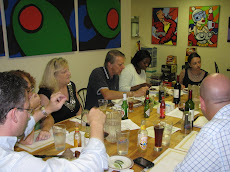
Eleven of us gathered at Laura’s Cuban restaurant on August 4 to share a meal and continue our conversation about emerging and missional church and what it means to us.


First, Anthony told his story about how he became interested in the emerging church and how he joined us at our table. Anthony is a professional musician, a multi-instrumentalist, and wants his music to bring healing, or at least to help people to forget their troubles for a while. Anthony graduated from college in the late 90s and worked as a school teacher until 2005. He became a Christian in 1980 and has been involved in church in some form since 1981. His experience with church too often has been about churches being hung up on collections, and manipulation by clergy. He saw some of this “behind the scenes” while traveling with an “evangelist/prophet.” He is also disappointed with how Jesus has been portrayed to the world, in ways that don’t center on loving God with all our heart, soul and strength, and loving our neighbor as ourselves. And he sees an absence of meaningful discussion about what the scriptures really mean about “loving…ourselves,” in a godly way.


Anthony yearns for truth and fears that too many Christians, often as taught by institutional churches, stay in the foyer of God’s house and don’t fully enter in to God’s healing, intimacy, nourishment and passion. He says that we can see Jesus’ passion when he overturned the tables of the money changers in the temple. And we can see that church is not just a building, which it too often mistaken for. In all of this, we can see that something’s not quite right. On the other hand, Anthony, who is a New York Italian, takes a lesson from Southern European families as an image of the Kingdom of God. He is inspired by Revelation 3:20 where Jesus invites us to have supper with him. And that this is a form of intimacy which God and we crave. Anthony says, “We’re always asking God to do stuff for us, but He is lonely.” Jesus came to restore what was lost in the garden, intimacy with God and with one another, as deep as the passion between a man and woman. God’s all about relationship and too often we go through the motions and forget the passion.


Finally, Anthony is concerned that a lot of us are Christians because “we’re afraid of going to Hell.” And because of fear-based religion, we wind up sometimes missing the life here and now that God calls us to in Acts 2:42-47 to care for one another’s needs out of love.


John agreed that there is too much emphasis in the church on money and that this reflects the same over-emphasis in American culture. Steve. F. added this phrase for how we keep score: “nickels and noses and Bibles brought.” And Kathy said you have to have money if you need to maintain a building and pay for “stuff.” Ann said we have to remember the foundation we’re built on, which for her is Jesus, and that there is a danger of us becoming a bitching club. And she asked what are we? Tom talked about the struggles of important Christian movements and the importance of being willing to re-think church. Because of what Anthony shared, he wants to be his friend. He wants to meet Jesus, not a pastor on a movie screen. Robin M. said that we are not “a church” per se, but when we gather we are church. He agreed that it is important to re-think what it means to follow Christ, and he asked how the conversations over the past year have impacted us?


Michelle said that feels free to be herself and follow the Spirit without worrying about what preachers or co-congregants will think. She is tired of church politics and wants to be about the business of doing God’s work. And she now enjoys going to different gatherings. Steve F. came to meet people and make friends, and he has. One of the most important take-aways has been not having to focus on “who is in and who is out,” but that where we are headed is more important. Revelation often occurs over a long period of time. Jim said that he feels that he has been “emerging” for the last 15 years, that the most important aspect is making disciples, and that he has found that missing from this group. Deb said she felt the Holy Spirit drew her to the group. And what she has found are people who work with the homeless and are missional in other ways. She finds that the people here live what others talk about. She shared about her prison ministry and how “organic” church there impacts lives. We ended by sharing stories about how God has acted in our lives in miraculous ways, and there was some working out of our understanding of the source of that miraculous power since Pentecost.


Salute!


Steve

Wednesday, August 26, 2009

July 09 Meeting

"Part of the joy of church is worshipping with people you love."

- Melissa

Twelve of us, including several newcomers, gathered on July 14th at Laura’s Cuban Restaurant to continue our conversation about emerging, missional and organic church and what it means to us. The diversity of Christian traditions represented at the table was interesting to note. We came from Episcopal, Adventist, Methodist, Presbyterian, Catholic, Baptist, Pentecostal and Salvationist backgrounds to name a few. Since our first Meetup was a year ago, we started to discuss how the conversations have impacted the way we live our lives. First, Melissa told her story of how she came to know about emerging Christianity and how she came to our table.

Melissa’s family included many pastors and missionaries. She spent much of her childhood with her family in the mission field and working for churches in places like Haiti and Dominican Republic before moving to Tennessee and finally South Florida. When she was finally settled in school her family declined to move once again to Africa since that would have meant boarding school for her and her siblings. They came to Broward County after the church in Tennessee closed their missions training program leaving her father jobless. This disappointment influenced her feelings about denominational, organized churches and how they can sometimes actually damage the lives of the families that are part of them.

Once in Broward County, Melissa’s father continued pastoral work in the denomination and did telemarketing on the side. During this time, she was exposed to and took part in many opportunities for service to those in need. This included outreach to children in the impoverished Overtown section of Miami every Saturday. Despite its challenges, these experiences taught her that serving others is simply part of what it means to be a Christ-follower.

Melissa eventually became a leader in her church youth group and became involved in Intervarsity. Shortly after High School graduation, Melissa’s sister moved to Mongolia to do missions and many of her friends moved away. During this time, God was able to demonstrate for her the importance of Christian community, which includes service to others. Also during this time, she met Robin M., who would become her husband, at a Bible Study in her house.

Eventually, Melissa began to visit other churches including a house church in her home and went to other churches with friends. She described these visits as tortuous, and the churches as either dull or over the top with emotionalism. She finally settled on the house church at her parent’s. Here she found real discussions about things that mattered. Melissa worked in homeless services at the time and the house church started gathering at one of the shelters. Her father stopped doing pastoral work at the large church they had been attending. Although the congregation was large, there was little participation in service or community and few new people were joining. He, and a few others, led this church gathering in the shelter for a time. So, for Melissa, gathering at the shelter for church meant that faith and her work that she loved with the homeless interacted in a missional way.

One day, Melissa’s husband Robin M. shared with her that he was thinking that he should go to school and become a pastor. Her reaction was, “of course you should,” and they moved to Canada where Robin attended seminary and interned at a local church. Here, Melissa and Robin met people who really cared about them. This care was not only about asking how they were doing but caring in practical ways, like baby-sitting. The focus now was on small church planting. During this time Melissa and Robin made connections with people who changed their lives, encouraging them to grow and to care about others around them. They learned that part of the joy of church is worshipping with people you love.

Once back at home in Broward County, Melissa and Robin started visiting “regular” church for a time. Then they began a small church gathering in their home and they have been privileged to participate with others in community. Returning to work with the homeless they are again able to see the missional interaction of faith with serving and helping and getting to know others. Melissa said that she doesn’t necessarily read all the books on emerging church, but simply looks to see what works or doesn’t work in practice. One thing she enjoys about our gatherings is the combination of fellowship and food. Anthony brought up that sharing meals has been, and should always be, a big part of “church.”

Next, we discussed some of the reasons behind the move towards emerging, missional and organic church. Michelle said that church is not about going to a building but that the she sees the Holy Spirit drawing more people towards relationship with Jesus and meeting the needs of others. Talking about small church gatherings compared to mega-churches, Kennedy said that he was able to find real community when he was at Willow Creek, a congregation of 18,000. He felt the key was the intentional way the people there went about relating to others, including newcomers. Beth said that she has seen few large churches like this. Michelle felt that fear of intimacy contributes to the anonymity found in many churches. For Kathy, worship and service to others is a key to what church is.

Finally, Anthony mentioned that one thing that is too often missing from church teaching and practice is attention to the importance of loving oneself. After all, we are taught to “love your neighbor, as yourself.” And without a healthy regard for self, it is difficult to share a healthy love with others. Steve W. said that Scot McKnight views “atonement” as having four directions: love for God, love for others, healing within oneself (along the lines of what Anthony was saying) and love for God’s world. We talked about God’s unconditional, sacrificial love for us, since we were created in His image, and the negative side of self-love which can be the problem of pride. Kennedy has heard the balance expressed this way - Jewish tradition relates the story of a rabbi who sought to understand his place in the universe. To keep a balance between too much pride and too much self-loathing, he had two notes, one for each of his two pants pockets. One note read: “For me the world was created.” The other note read: “I am nothing more than dust and ashes.” The task of the rabbi is our task: to integrate these two messages and keep them in appropriate balance.

We decided to meet again in a month to continue our conversation and share another meal together.

Blessings,

Steve W.

Saturday, August 15, 2009

June 09 Meeting

“People I am in community with are people that I can share things with that I’m most ashamed of and still be loved and accepted ... they are ‘refrigerator friends’ who can walk in and go to your refrigerator and take your last beer.” - Kennedy

Eleven of us met on June 2nd at Laura’s Cuban Restaurant in Hollywood to continue our discussion about postmodernism, community and emerging church and what it all means to us.

First, Kennedy shared his story about his spiritual journey and how it led him to the emerging church conversation and to our table. Kennedy is from Chattanooga, TN, the son of a Presbyterian minister. Having grown up as a pastor's kid and seeing some of the more problematic issues of church, he never wanted to go into ministry. At the same time, he had a passion for the church and a need for Christian community. In college Kennedy was part of the party scene. But he felt God used that time to break down his defenses in order to relate better with people. And he became known as kind of the unofficial “chaplain” of the party crowd he hung out with. One thing he noticed during this time was that everyone he met was on some kind of spiritual quest.

Kennedy decided to attend seminary. The experience stretched him, but also left him burned out. He eventually took a job in NYC in public relations working for celebs and dance clubs. He also worked in a church in upper Manhattan, where it was trendy and politically correct. The church also happened to be near the offices of people who campaigned for peaceful change in Central America. With them he was able to re-engage in church as mission locally recalling that “A light that shines the farthest, shines the brightest at home.”

Thereafter, Kennedy wanted to travel and visited multi-ethnic and multi-cultural churches during a mini-sabbatical. While in Pittsburgh and Philadelphia he experienced almost a second conversion as he gathered with vibrant church fellowships where members cheered as people walked down the aisle towards the alter towards transformed lives. This, he felt was the ultimate cause and God ignited a fervor in him to see more lives transformed by the God of love. During his travels, he would often hang out with the regular folks, doing what regular folks do (not always what church-going folks might approve of). During these times, conversations would turn to spiritual matters and the people that Kennedy hung out with were shocked to find out that the “church” had anything relevant to say about faith. During the sabbatical he explored the Taize Community and visited Willow Creek Community Church. During this time he also became engaged to marry, and then “dis-engaged.” And during this time he learned to desperately depend on God.

In DC, Kennedy became involved with a multi-cultural Baptist church. Here, he also met and conversed with Brian McLaren, author of A New Kind of Christian and who was pastoring at Cedar Ridge Community Church in MD at the time. They discussed the post-modern, emergent movement and how it can impact a very modern denomination like Presbyterianism. Kennedy went back to Long Island and made and saw major shifts in his church, focusing mainly on people re-connecting. Three years ago he came to Hollywood, FL where he pastors at First Presbyterian Church. His vision is for a congregation that is more organic, centered mostly in people’s homes, and one that reaches out to folks in Starbucks and bars more than one centered in a church building. He found out we have an emerging church Meetup close by and decided to check us out last year.

Matthew asked what Kennedy sees as the road map to move beyond the walls of traditional church. Kennedy feels that the key is to help ignite a passion in “church people” for the people who are not there, where diversity is valued and nothing is unexpendable. Steve F. shared how frustrated he is with a lot of “visions.” He wants to touch something supernatural when people get together. Kennedy agreed and clarified that “vision” arises out of community, not focus groups. We briefly discussed how these conversations typically involve movements such as “house churches” and “de-centralized leadership” which are more common models outside of the West. Steve F. gave some push back by imagining how irrelevant various “movements” can seem to Jesus.

Steve W. read a blog post from Scot McKnight, Kingdom Gospel 5, which concludes, “The Gospel is about church formation before it is about personal formation.” Michelle felt it has to really be the other way around, that you can’t have church transformation without personal transformation. Kennedy added that, that best happens when personal transformation happens in community. “You just can’t say a few words, a ‘sinner’s prayer,’ and typically expect transformation to happen right away.” Matthew felt that the post describes a road along which personal transformation happens, with community at the end. In the process, a new, alternative kingdom is created, where healing and justice replaces the broken society we too often encounter around us. Steve W. was reminded of John Wesley’s quote, “There is no holiness but social holiness.” Robin M. said though that is not about a “social movement” but about how we relate to one another.

Steve W. read some excerpts from Robin M.’s seminary paper, Postmodernism, Community and the Emerging Church, Part 2 – ‘Restoring Community.’” Michelle asked, what is real community? To Robin M. it is about real relationships over time, starting with family. It is not a shared activity as is commonly thought of but is relationship based, and these relationships are not without problems that have to be worked through. Kennedy thinks of it this way, “People I am in community with are people that I can share things with that I’m most ashamed of and still be loved and accepted. These are people you can call at 2:00 in the morning. They are ‘refrigerator friends’ who can walk in and go to your refrigerator and take your last beer.” We agreed that we’re in community with our friends when we are committed to each other through both the fun times and the rough patches. Community can be messy. Robin M. said it this way, “A lot of people have not been loved through their issues and been shown God’s unconditional love by others. This is what it means when it’s said that the Christian life is caught more than taught.” Kathy added that this has to involve both people in a relationship being vulnerable with each other. Kennedy said he is very vulnerable with people in his church. And that he doesn’t have many clergy friends because they seem to feel they have to wear a mask. One of his closest friends is a Rabbi who is a recovering alcoholic. Finally, we were reminded of an observation by Mother Teresa who has seen so many in the “Third World” who have nothing in terms of material possessions, but who were beaming because they have each other.

We prayed for each other’s needs that some of us shared and agreed to meet again in a month to continue the conversation.

Steve

Sunday, June 14, 2009

May 09 Meeting

“It’s more important to make a difference than to argue about our differences.”

Ten of us gathered for a time of conversation, community and Cuban food on May 12. We continued to discuss postmodernism. Michelle joined us as a newcomer and we went around and all shared a little about ourselves and our own spiritual journey. This turned out to be a great way to hear where each of us is at, individually, and as we have been coming to the table together.

We shared and heard many of the same themes, first about what people were coming away from: legalism, always studying but never arriving, facing so many hurdles we become tired, constraints like this music or art is acceptable and that isn’t. Then we shared and heard where we’re moving to: community, seeking the face of God, creativity and being culturally relevant, serving the homeless and needy, loving God and loving our neighbor. It was a good time of sharing which led us to Beth telling her story…


Beth’s Story

Beth was a “missionary kid” (MK). Her dad is a United Methodist pastor and growing up in Southeast Asia and Central America helped shape her worldview. Following the Biblical example, she recalls her father helping a homeless man with leprosy, and instilling the attitude, “maybe one could get leprosy this way, but it’s the right thing to do.” Church was positive and comfortable, with a focus on "right living" and outreach, but without rapture stories or “hellfire & brimstone” sermons. On the other hand, growing up as a missionary kid influenced who Beth became, giving her empathy for outsiders and a sense of why we’re here…to look out for others in Christ's name. She was able to express art, creativity and talent, and at age four aspired to be a “ballerina missionary.”


Growing up in Central America at the beginning of a period of civil war, knowing of people being jailed and persecuted throughout the Americas, and later--liberation theology and living in community houses all gave Beth a more mature concept of what Christianity is about. And that it is not simply a service on Sunday mornings.

Beth married Flavio (See Oct. 08 Meeting for Flavio’s story), who is from a Mennonite background, while in college. They lived for a while in San Antonio, TX near an area of government housing characterized by gang & drug violence and drive-by shootings. They joined a “peace circle” among the residents (all immigrants and refugees) and later began a community meeting where they met regularly, read the Bible, and experienced and talked about the ways God was intervening in their everyday lives. One result of the peace circle was that peace did indeed breakout and this violent block became known as a place where it was safe for kids to play and one where people tried to move to and not away from. Beth and Flavio lived among the poor, who had minimal access to healthcare, where it was a struggle to feed one’s family and people lived on the verge of homelessness. This also influenced how they themselves lived, in community, with people committed to living "missionally" and taking turns cooking, cleaning and taking out the trash and re-cycling. This incarnational living is a demonstration of God’s love by meeting the obvious needs of the people around us. And while not an overt evangelistic crusade, this living is infused by faith and only possible through a deep faith in Christ.

Beth shared about different styles with which churches approached ministry in the poor neighborhood. Some church congregations would come with loud speakers and tracts and try to get people to go to their church. They didn’t go. The people in the government housing project explained they didn't go to the church of the people with the tracts and loudspeakers because, “They’re only here on Sunday, and you’re here every day and know what it's like.” Beth also shared a story about working with laid-off garment workers who were locked out of the factory. They didn’t believe they had the right to raise their voice until they learned that God does hear the cry of the oppressed. And finally, she told a humorous and blessed story of holding communion in the housing project in San Antonio, with the (Matt. 10:11) woman of peace and her husband who had a tendency to imbibe too much. They sent him to the store to buy the wine for communion. He came back with a bottle of Thunderbird. So there they were, in beloved community, with no professional clergy… remembering Jesus…with tortillas, and a bottle of Thunderbird wine for their communion. These simply were, as Melissa put it, the elements we use in every day life.

After Beth and Flavio moved to Broward County they began encountering emerging Christians, such as at Epic Re-mix church. And they began to read books like Velvet Elvis and Surprised by Hope. All of this resonated with their own spiritual journey. Following Christ became less and less about how to get people into structured church organizations. It became more and more about gathering, being disciplined and learning from other Christians. At the same time they no longer felt called to a structured church congregation, they also felt there was a whole lot more to do. Life was to be missional, and flexible. It was to happen where we live and be expressed by how we relate to those around us. We’re here also to do this with other people and not be a lone ranger. Following Christ is not a trip about “my own personal Jesus.” It is a journey into community, with God and with others. Living in a poor neighborhood has been part of Beth & Flavio’s spiritual journey. It is counterintuitive in our culture.


Melissa observed that the way we relate to people can break down barriers that keep us separated from God and from each other. It doesn’t mean that we have all the right answers, but that we walk alongside one another on the journey.

One of Beth’s main take-aways from her life’s experience is that it is ok not to have all the answers, and to simply listen to what God has to say through others.


This led to a discussion about incarnational living and what that means. The Christian gospel has too often been reduced to well reasoned arguments, which Michelle equated with pride. Steve F. recalled his many years in the church which relied on well reasoned argument…about salvation, evolution, and what a Christian is supposed to be and look like and believe. Where it all falls down he said is when you’re faced with a real live person, including a son, a daughter, a wife, who doesn’t fit neatly inside the box. Michelle said that knowledge is good but it is not what is going to get us into the Kingdom of Heaven. It’s more important to make a difference than to argue about our differences. Kelly told a story about a time when he was at Piccadilly Circus in London and a street performer gathered a crowd by making fun of Christian caricatures. When he was done he turned the tables and told the crowd, “Now, I want to tell you about Jesus.” The reaction of the crowd was probably not what he expected…everyone kept laughing at him. We concluded that if we’re not relational, the gospel can too often become a circus.

We prayed for some of the needs among us before we parted. We decided to meet again on Tuesday evening, June 2, to continue the conversation.

That we may be one,

Steve

Wednesday, May 13, 2009

Kingdom Gospel

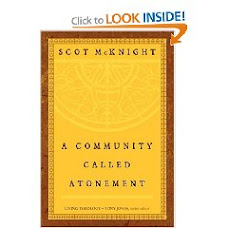
Scot McKnight is the author of numerous books with an emerging and missional Christian perspective, such as A Community Called Atonement and The Blue Parakeet: Rethinking How You Read the Bible. He also wrote the article Five Streams of the Emerging Church which we started this cohort with. On Scot’s award winning Jesus Creed blog, he has a new series on Kingdom Gospel. The focus is on the community aspect of the Kingdom and how that is missing from too many evangelical Gospel presentations. Along with our current discussion about postmodernism and our upcoming focus on community, I was inspired enough by Scot’s post to re-post it below with permission.

Some of the resources by McKnight mentioned above, and others, are linked at the left sidebar.

******************************************************************************

Kingdom Gospel 1
Monday May 11, 2009

If "kingdom" is the solution, what is the problem?

Jesus' gospel message of the kingdom of God is itself a blue parakeet for many today. In fact, many have tamed Jesus' blue parakeet message of the kingdom and this chapter may well provide a reason why some feel this way. Encountering Jesus' kingdom gospel not only makes us think, but it makes us think we just might have gotten lots of things wrong. It makes us rethink how we are reading the Bible. It makes us think about what the gospel itself is. It also makes us back up to the elements of the Story - creation, cracked Eikons, covenant community, Christ, and consummation - and see which of these elements are the focus of Jesus' own preaching. In this chapter we will examine how Luke tells the Story and we will see that his focus is squarely on two elements, Christ and covenant community. Some are surprised by what they see when they read Luke's Gospel.

I grew up on a gospel that was neat and trim; it was clear and simple. The more I read the Bible the more convinced I became, though, that something was wrong on center court. When some folks read the Bible, they only want to see creation, cracked Eikons, Christ and the consummation (heaven).

The gospel that deconstructs church

Many readers of the Bible read the whole Bible through the lens of the gospel they believe and this is what that gospel looks like:

God loves you and has a wonderful plan for your life.
But you have a sin problem that separates you from God.
The good news is that Jesus came to die for your sins.
If you accept Jesus' death, you can be reconnected to God.
Those who are reconnected to God will live in heaven with God.

Every line of that statement is more or less true. It is the sequencing of those lines, the "story" of that gospel if you will, that concerns me and that turns Jesus' message of the kingdom into a blue parakeet. And it is not only the sequencing, it is the omitting of major themes in the Bible that concerns me. What most shocks the one who reads the Bible as Story, where the focus is overwhelmingly on God forming a covenant community, is that this outline of the gospel above does two things: it eliminates community and it turns the entire gospel into a "me and God" or "God and me" gospel. Who needs a church if this is the gospel? (Answer: no one.) What becomes of the church for this gospel? (Answer: an organization for those who want to do that sort of thing.) While every line in this gospel is more or less true, what concerns many of us today is that this gospel makes the church unimportant.

I believe this gospel can deconstruct, is deconstructing, and will deconstruct the church if we don't change it now. Our churches are filled with Christians who don't give a rip about church life and we have a young generation who, in some cases, care so much about the Church they can't attend a local church because too many local churches are shaped too much by the gospel I outlined above. To be truthful, the gospel above is a distortion of Romans. More and more of us, because we are reading the Bible as Story, are seeing the centrality of the church in God's plan and the gospel being preached too often is out of touch with the Bible's Story.

Yes, Jesus said something like every one of those lines though he never packaged them quite like that. (Nor did Paul in Romans, to be honest.) Is this the gospel? Yes, this gospel is right. The problem is that it isn't right enough. I can give a bundle of problems with this packaging of the gospel, but it all comes down to one big problem: this gospel above isn't the Bible's Story. It is like taking five stars from the sky, knocking them out of their orbits and solar location, and lining them up like ducks in a row and then saying, "Here's our starry sky!" The only way to understand stars is to learn their location and their history and their connections and let each star shine in its place in the sky - and the only way to read the Bible is is from front to back. It doesn't make sense if we don't read the whole thing and to see how each chapter relates to the whole Story. Once we do we come to terms with the gospel that emerges from the Bible's Story.

If reading the Bible as Story teaches us anything, and we need to emphasize this one more time, it teaches us that God's work in this world is to form communities that visibly demonstrate the power of God at work in this world.

**************************************************************************

The comments are also WELL worth a read here where you can also navigate to the original post and the other posts in this excellent daily series. Join in the Jesus Creed on-line community conversation, or leave a comment here.

Blessings,

Steve

Saturday, May 9, 2009

April 09 Meeting

At right: American Visionary Art Museum, Baltimore, MD

Nine of us met on April 21st to start our discussion about postmodernism and the church, and what it means to us. Steve W. and Robin M. shared a summary and questions based on Robin’s paper titled, Entering the Emerging Church Conversation

Matthew offered some context on what postmodernism is. Modernity says that there is one right answer and that it can be discovered. Words have definite meanings. In post-modernity there may not be one right answer but, at least for Christians, there are still absolutes, such as the command to love one another. We talked about situations where showing love means pointing out behaviors that can be harmful to a person or to those they love around them, and how it is important to have a caring relationship with that person to earn the right to do so. Matthew continued that in modernity, the meanings of words are derived from the speaker. In post-modernity, they are more often derived from the listener. He later shared his story about what led him to the emerging church conversation and the impact that postmodernism had on his theology. His story is summarized below.

We discussed various controversies within the church and looked at how the views of modernity and post-modernity have shaped these dialogues. We have all seen church debates about things like how one is baptized, drinking alcohol, the role of women in the church, human sexuality, or asking questions about commonly held doctrines. Anthony described experiences in churches where doctrines were enforced by fear. We discussed the role of the Holy Spirit in teaching us. We agreed that while we cannot be a “lone ranger” in the community of the church, we can and should grow to be a fully equipped “army of one.” We also discussed how church practices that were helpful in one culture could be harmful in another, such as the many impositions of European cultural practices among native cultures by missionaries in the name of the church.

In post-modernity we can hold different opinions about a matter without needing to be convinced we’re right. This is an important reason why there can be such a thing as an “emerging church conversation.” Redemption is worked out in many aspects in our lives, not so much as a series of theological arguments that are won or lost, but by the direction our lives follow towards the way of Christ.

Matthew’s Story

Matthew’s youth pastor led him to Christ in his early teens. Before a week passed, that youth pastor was in jail, as this adult horribly abused his relationship of trust with one of Matthew’s friends. Abuse of power continued to be a theme that Matthew encountered during his journey. Because of his pastor's actions, just after coming to Christ, Matthew wandered away from the church.

Although Matthew’s parents didn’t attend church often, he was enrolled in a Christian school, and that was part of what ultimately influenced him in the direction of missions through High School and college. Every summer, Matthew would travel to a different continent, 24 countries in all. At one point though, his activities and opportunities began to close in due to a health problem. Some trusted church friends and advisors blamed him for the problem telling him it was due to “unconfessed sin.” Others said that God had rejected him, and still others said he was being tested and that he needed more faith to continue in the mission field as if he did not have the issue with his heart. These viewpoints damaged Matthew’s faith for a time, and once again he left the institutional church. Although he remained conservative in his behavior and beliefs, he began to wander and question. What did he really believe? What about Eastern religions? Should he abandon religion if this is all that it offered – judgment and an angry, vindictive God? Should he go to a Christian college? Was there some form of Church that did not think this way? Despite these questions his faith grew, and he became convinced that, although he could no longer spend much time overseas, God had not rejected him, and that being a missionary could be done in his home country.

Matthew tried youth ministry, but often encountered bad theology there along with judgment, and abuse of power. In one situation, he and a youth ministry coworker encountered someone being beaten up by a gang. They interceded to try to save the victim, willingly taking punches for the man who was being attacked, while refusing to fight back against the gang. Instead they told them that Jesus forbade them to harm the gang members, but that they would suffer for the man who was being attacked. They came into work bruised and bloodied from the encounter; Matt with bruised ribs and Matt’s coworker with a broken nose. They explained their situation as a way to talk about the brilliance of Jesus’ teaching on turning the other cheek, since the gang simply refused to attack them after a few blows, amazed that someone would do this for a person they did not even know. They were fired for setting a bad example to the youth by getting involved with gang violence. Matt’s coworker walked away from Christ.

While serving under a youth pastor, he witnessed that pastor speaking about the dangers of oral herpes to a youth group, 80% of whom had the disease. The church promptly fired that youth pastor for mentioning oral sex. In another situation, he witnessed a new youth pastor who felt so threatened by an old volunteer pastor's relationships, that he drove the volunteer pastor from the church.

In another situation, while working as a youth pastor, Matthew was allowed to speak before the main church body at a mostly white upper class congregation about the things he’d seen on the mission field, such as AIDS, poverty and the plight of victims of sex trafficked debt slavery. He spoke of a vision of church where the poor, the widow, the outcast, and the alien were given the seats of honor in the church body. He challenged the church body to focus its spending outside its walls, on the needy, and not inside them (on better cushioned seats, for example). He also spoke about the need for this particular church to focus on the poor locally and to become racially diverse, saying in that message “We who are rich need the poor more than they need our money. We have the same curse as the pirates in the movie Pirates of the Caribbean (which had just come out) –we have the best food, but we can’t taste it; the finest drink, and we don’t know it. We have the whole world but we have lost the ability to feel it. Everyone loves the rung above them as they climb the corporate ladder; Jesus’ way and brilliance was and is to love those on the rung below him [and us]. The poor redefine our lives and allow us to discover what is truly most human, most beautiful, and most important – everything that we have missed. Having the poor in our lives allows us to rediscover the value of a dollar, and the value of a dollar is nothing, except that it can save a life and a soul.” Again, he was let go as this vision conflicted with the head pastor’s “growth strategy.”

These experiences influenced Matthew’s thinking and theology, since, what you experience shapes what you think about and perceive. Now in his late 20’s, his theology has radically changed. He decided that he would never again accept pay to do church ministry. “When it is your job to say that which God is directing you to, and your pay depends on your audience liking you, you will always have conflict,” he said, “especially if you look at those who God asked to speak in the Old Testament, they always said the thing the Israelites were least interested in hearing. Those entrusted to be God’s voice in that period had to risk life and limb, luckily I only lost a paycheck!” He also found that being a paid institutional pastor too often means that you are expected to not do what you are calling your people to do. For example, you can call your congregation to confess their sins and weaknesses to one another and be held accountable, but you are expected to be seen as above the fray—a leader without weakness. The problem, he said, isn’t just disobedience to what God is saying, but that this elevated status of the staff prevents paid ministers from having a deep level of intimacy with those around them, and leads to fake friendships. The pastor winds up being more of a counselor and cannot be a participant in their own church community.

Matthew’s dream is in the direction of non-institutional, organic church. Church should grow but be free from the pressure of ego driven growth that kills the very essence of what church should be. It also leads congregations into unnecessary debt in order to support church building programs and budgets. Church leaders should not hold “dual citizenship” as a professional class; this keeps the church inactive and keeps the pastor from being held accountable. There should be a crowd of teachers and elders and all kinds of people sharing in the areas of their gifts. His dream is in the direction of the emerging / missional church; where resources are channeled to the needy, not buildings and staff; where people are empowered to lead, not just be gathered like sheep; where the focus is on the needs of each individual’s growth, not on the need to maintain order. Finally, he envisions church as a place where pastors don’t have to miss out on the very community they are shepherding. See more on Matthew's vision for church at CollaborativeChurch.

Join us on Tuesday, May 12, 2009 at 6:45 p.m. at Laura’s Cuban Restaurant in Hollywood, when we meet again to continue our conversation about emerging church, postmodernism and community. You can RSVP and find directions here.

Blessings,

Steve

Saturday, April 4, 2009

March 09 Meeting (#2)

Seven of us met last Tuesday to continue our conversation about emerging and missional church. Since our group was smaller, we postponed our discussion on postmodernism and took the opportunity to have a more casual conversation about our Meetup. We’ve been gathering since last June and have discussed a variety of topics related to emerging and missional church. We’ve heard from quite a few of us who have shared our stories, and many of us have met new friends. So, we asked a few questions like, what impact the gatherings have had on us in any way?

Steve F. said that so much of what has been discussed resonates with him. Even more importantly, he’s made friends. And the group is a place where he can be real and talk about whatever he wants, and raise questions, and not have anyone think he is a heretic afterwards and he can still be loved when the conversation is over. He also mentioned that it has been a good network and gave an example of several of his employees taking it upon themselves to help paint at the homeless family shelter that Robin M. oversees.

Steve W. commented that he is glad there have been so many connections formed by people in the group, outside of the group.

Robin M. added that the regular meetings have allowed for consistent connections where people can touch other people’s lives. Discussions have been about things that are valuable and important and deal with people’s questions like what it means to be a Christian. At the same time, some people have been led to want more. For him, after he returned from seminary, it gave him a place to interact with a community of faith he didn’t have. The people, the community and the conversation have been like church in some ways.

Flavio felt it has been a good bridge for emerging Christians from all regions of the county, and a good place to invite people to a broader conversation on emerging church topics. Facilitation allows everyone gets to participate as opposed to “pulpit to pew” formats that are more common in institutional church settings. Steve W. added that it is good that the group regularly includes people ranging in age from twenty-somethings to people in their sixties. Flavio raised a question though about how to mix a generic conversation about different aspects of the emerging church with true community. Robin M. sees the group more as a bridge to that. Linda (who has attended twice with her husband Steve F.) said that she has seen the impact on Steve F. of meeting new friends in the group and that it has been very satisfying for him. Kathy asked Steve F. if he found it hard to set aside time since he is so busy with his company. He said it wasn’t hard since he finds it more important than some other things.

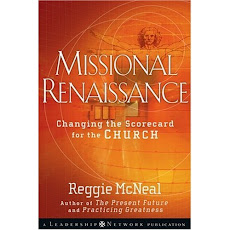
Robin M. said the gatherings create space to ask questions that people normally can’t ask, and a place for people who have gotten burned out on traditional church. Kathy W. mentioned that she became interested in trying something new after reading Present Future by Reggie McNeal as recommended by her pastor. She likes that the meetings are in public places where others can join in and that it is a non-threatening opportunity to share wherever you are on the journey. She was a little surprised that the group has been virtually all Christians seeking more, than it has been people on a spiritual journey who may not consider themselves Christians. And she feels the discussions have gotten a little esoteric at times. However, she has always enjoyed the time together.

Beth’s experience with the group is that she views it as more of an intellectual journey of what emergent things are, as opposed to community. But she knows that about half of the regulars see each other at other times in community (such as at the small church gatherings that Robin & Melissa have started in their home, or in smaller get-togethers or one-on-one). She also distinguished between social time and being intentional about community. This lead to a discussion of where we’ve been and where we should go: A clearinghouse for people on a journey to share ideas and meet others interested in “emerging?” Should we have a second monthly Meetup that is more focused on intentional community? Would people have time for that or are these needs being met in other ways? Are we trying too hard to figure it out?

Why not join in the conversation through comments below? You can also see some of the questions we brought up here.

We decided to meet again on April 21, 2009 at Laura’s Cuban Restaurant in Hollywood to continue our conversation about emerging and missional church and what it means to us, to share our stories and to pick back up on postmodernism. You can RSVP here.

Hope to see you then!

Steve